Is Zyn Addictive? Signs of Nicotine Pouch Addiction You're Probably Ignoring
Felix
· 8 min read
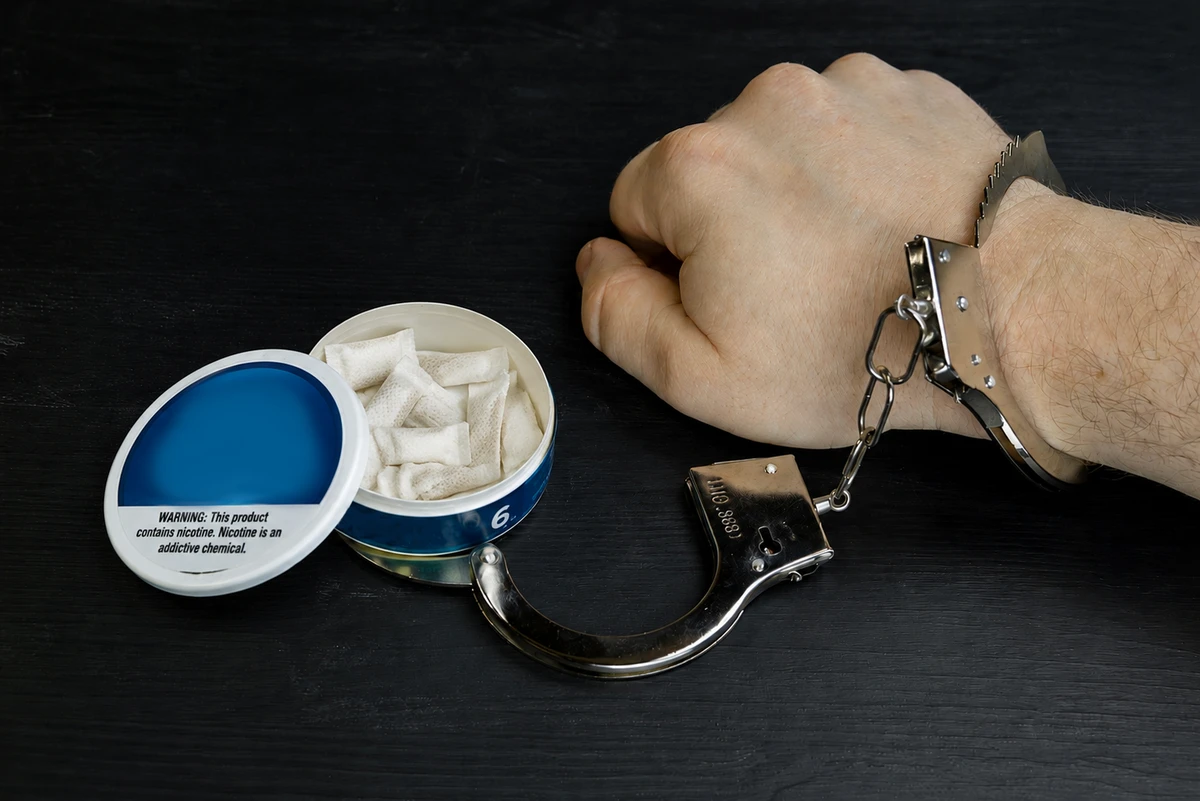
Nobody calls themselves addicted. That’s part of the problem.
The word “addiction” comes loaded. You hear it and picture someone at rock bottom. Social decline. Hard drugs. Not someone with a good job, a social life, and a tin of nicotine pouches in their pocket.
That disconnect is exactly why so many pouch users never ask the question. It doesn’t feel like addiction. It feels like something you enjoy. Something that makes your day a little better. And that’s what makes nicotine pouches tricky.
What addiction actually means, clinically
Before asking “is Zyn addictive,” it helps to know what dependence actually looks like in clinical terms. The WHO’s ICD-11 classification defines nicotine dependence as a pattern that includes:
- A strong desire or urge to use nicotine
- Difficulty controlling use (starting, stopping, or managing the amount)
- Withdrawal symptoms when you stop or reduce
- Tolerance (needing more to feel the same effect)
- Continued use despite recognizing harmful consequences
- Giving priority to nicotine use over other activities
The diagnosis applies when these patterns are present for at least 12 months, or at least 3 months of continuous daily use.
Read that list again. If you use nicotine pouches daily, you likely check at least two or three of those boxes. Most users check four or five without realizing it.
But here’s the thing: whether nicotine pouches make everyone addicted isn’t a simple yes or no. It varies by person. What I can say from experience is that the line between “habit I enjoy” and “dependency I can’t stop” is blurry, and you usually cross it before you notice.
Why you don’t notice it happening

Nicotine feels good. That’s the core of the problem. It relaxes you. It gives you a quick, intense kick. Some brands deliver nicotine so fast it creates a genuine rush, almost euphoric, that lasts a few minutes. When something feels that good, you want to do it again. That’s not addiction. That’s just logic.
The shift happens when the absence starts to feel bad. Not just “I’d like one” but “I need one.” When the can gets low and you feel a low-level panic. When you plan your day around pouch breaks without thinking about it.
I never let my can run empty. The moment I noticed it was getting low, I’d make sure to buy a new one before it ran out. That behavior felt normal at the time. In hindsight, it was one of the clearest signs.
The problem: you don’t experience yourself as addicted because the word doesn’t match your self-image. You’re not the person society pictures when it hears “addiction.” You’re functional, social, productive. The nicotine is just a small thing you enjoy. Calling it addiction feels wrong, even when it technically fits.
Curious how many pouches you actually use each day? Most people don’t know their real number. Track it with SnusStop — one tap per pouch.
The signs you’re probably ignoring
You live from pouch to pouch
Your day has a rhythm and nicotine sets the tempo. Morning pouch. After-breakfast pouch. Work pouch. Lunch pouch. You’re always looking ahead to the next one. When you can’t have one, you’re mentally counting down until you can. If your entire day is organized around nicotine moments, that’s not a casual habit.
The kick isn’t what it used to be
You started at 6mg. It felt incredible. Then 6mg stopped working. So you moved to 10mg. Then 15. Then 20. You’re chasing a feeling you had the first time, but you never quite reach it again. This is tolerance, one of the clinical markers of dependence. You need more substance to produce the same effect.
The empty can makes you nervous
Not mildly inconvenienced. Nervous. You make sure it doesn’t happen. You keep backup cans. You detour to a store before it runs out. The thought of facing your afternoon without a pouch creates genuine anxiety.
You tried to stop and couldn’t
Maybe not a dramatic attempt. Maybe you just said “I’ll skip today” and couldn’t make it past lunch. Or you planned a break and lasted two days before buying a can “just for emergencies.” Failed attempts to reduce or stop are one of the WHO’s diagnostic criteria for dependence.
Why pouches might be more addictive than cigarettes

This is my personal opinion, not a clinical claim. But I believe nicotine pouches carry a higher addiction risk than cigarettes for several reasons:
Higher nicotine doses. A typical cigarette contains 10-17mg of nicotine, though only a fraction reaches your bloodstream. A mid-range nicotine pouch (10-15mg) delivers a comparable amount, just more slowly. But pouches go far beyond that. Some brands sell pouches with over 100mg of nicotine per pouch. Even “strong” options at 20-50mg deliver several times the nicotine of a single cigarette. Cigarettes top out around 17mg. Pouches go to 100mg+. That range doesn’t exist in the cigarette market.
Speed of delivery. Many pouch brands release nicotine extremely fast through the oral mucosa. The faster the hit, the stronger the reinforcement loop in your brain.
Invisible consumption. You can use a pouch anywhere. At your desk. In a meeting. In class. On the train. There are no smoking breaks, no going outside, no social markers that you’re consuming nicotine. Cigarettes have built-in friction points. Pouches have none.
No legal barriers. Smoking bans apply to cigarettes, not to pouches. You can use nicotine in offices, schools, government buildings, anywhere. Every boring situation in your day becomes a candidate for a pouch. That removes the last barrier between “occasional” and “constant.”
Seamless transition from smoking. If you already smoked, switching to pouches feels like an upgrade. Healthier, cleaner, more socially acceptable. But your existing nicotine dependency transfers seamlessly. You didn’t quit nicotine. You changed the delivery method.
The 60-second Anchor in SnusStop helps you pause between craving and decision. Not to lecture you. Just to see what happens when you wait.
The simple test
If you want to know where you stand, there’s one test that cuts through all the theory:
Stop using nicotine pouches for one week.
Not “use less.” Not “switch to a lighter brand.” Stop completely for seven days. Then pay attention:
- Can you do it without significant discomfort?
- Do you think about pouches constantly?
- Does your mood shift? Irritability, restlessness, trouble sleeping?
- Do you reach the seven days without caving?

Here’s a way to put it in perspective. I like diet soda. I drink it regularly and I enjoy it. If I stopped drinking it for a week, I wouldn’t think about it much. I’d go back to it afterward and it would be fine. No anxiety, no restlessness, no counting the days.
Now ask yourself: could you say the same about nicotine pouches? If skipping them for a week feels like skipping diet soda — no big deal, just a preference — you’re probably fine. But if after two or three days you’re nervous, irritable, and can’t stop thinking about it, that’s a different category. If diet soda never made you feel that way, but nicotine pouches do, you have your answer.
If a week feels manageable, your dependency is probably mild. If you struggle after two or three days, if the cravings dominate your thinking, if you can’t make it through the week, that tells you more than any article or definition ever could.
For more on what withdrawal feels like day by day, read the full timeline here.
The social layer nobody talks about

There’s something else going on that makes this harder. In many social circles, nicotine pouches aren’t just accepted. They’re cool. Nobody talks about dependency because the group dynamic doesn’t allow it.
I’ve seen it: people competing over who can use the most pouches in a day. Turning their consumption into a joke. Making memes about it. That humor isn’t random. It’s a coping mechanism. People who joke about their habit that hard usually know, on some level, that they have a problem. The irony is a way to acknowledge it without having to actually deal with it.
The education gap makes it worse. Parents don’t know what pouches are. Schools barely address them. Media coverage is growing but still thin. And the people who use them every day talk about it in memes, not in honest conversations.
I think this topic needs a shift in perspective. Away from moralizing. Away from the raised finger. Away from stigma. Nobody benefits from being told they’re making a bad choice. What does help: information. Awareness. Self-compassion. It’s okay to have a problem. Many people do. It takes courage and honesty to look at your own habits clearly rather than telling yourself it’s fine.
I started this blog because I wanted that kind of information when I was going through it myself. It didn’t exist, so I’m writing it now.
Frequently Asked Questions
Is Zyn actually addictive?
Nicotine is an addictive substance, and Zyn delivers nicotine. The WHO classifies nicotine dependence as a diagnosable condition when use is daily for 3+ months with signs like tolerance, withdrawal, or inability to stop. Whether you personally develop dependence depends on how much you use, how often, and your individual neurochemistry. Not everyone becomes dependent at the same rate, but the risk is real.
How long does it take to get addicted to nicotine pouches?
There’s no fixed timeline. Some people report dependency symptoms within weeks of daily use. Others use occasionally for months without issues. Key risk factors: high-strength pouches (15mg+), daily use, and using nicotine as a coping mechanism for stress or boredom. The WHO criteria apply after 3 months of continuous daily use.
Are nicotine pouches more addictive than cigarettes?
No clinical study has directly compared addiction rates between pouches and cigarettes. Some argue that faster nicotine delivery through pouches increases the reinforcement loop. Others argue that cigarettes contain additional chemicals (MAOIs) that enhance nicotine’s addictive properties. From personal experience, the invisible and frictionless nature of pouch use makes overconsumption easier.
Can you use Zyn without getting addicted?
Possibly, if use is infrequent and low-dose. But nicotine’s pharmacological properties make casual long-term use difficult for most people. Tolerance builds, leading to increased consumption. If you’re currently using pouches and wondering whether you’re dependent, the one-week test described above is the most honest self-assessment.
What are the first signs of nicotine pouch addiction?
Planning your day around pouch breaks. Feeling anxious when your can runs low. Needing stronger pouches over time. Failed attempts to cut back. Thinking about nicotine pouches frequently throughout the day even when you’re not using one.
This isn’t about blame
If you use nicotine pouches and you’re reading this, you’re already doing more than most people. You’re looking at it honestly. That takes more than willpower. It takes honesty with yourself.
Nobody is going to shame you into quitting. That approach doesn’t work. We’ve seen it fail with cigarette warning labels for decades. What works is understanding what’s happening in your body and mind, and then deciding for yourself what to do about it.
Whatever you decide, know that it’s okay to have a problem with nicotine. Many people do. And it takes real courage to face that instead of pushing it away with another pouch.
SnusStop helps you track, reduce, or quit nicotine pouches at your own pace. Download on the App Store | snusstop.app
This article is for informational purposes only and does not constitute medical advice or an encouragement to attempt nicotine withdrawal. Nicotine withdrawal can carry risks, particularly for individuals with pre-existing conditions, during pregnancy, or when taking medication. The author is not a healthcare professional. Consult a qualified medical provider before starting a withdrawal. The information presented here is based on publicly available research and personal experience. It is not intended to diagnose, treat, or prevent any condition. The views expressed reflect the personal opinions of the author. Statements may be inaccurate or incomplete, and arguments may contain gaps. Images used in this article are symbolic and sourced from Unsplash. They do not depict actual nicotine pouch users and are not intended to be interpreted as a call to action. This website and its content are intended for adults (18+). Disclosure: The author is the founder of SnusStop. "Zyn" is used in this article as a commonly recognized term for nicotine pouches and does not imply any affiliation with or endorsement by the ZYN brand or its parent company.