Zyn Side Effects: What Nicotine Pouches Actually Do to Your Body
Felix
· 8 min read
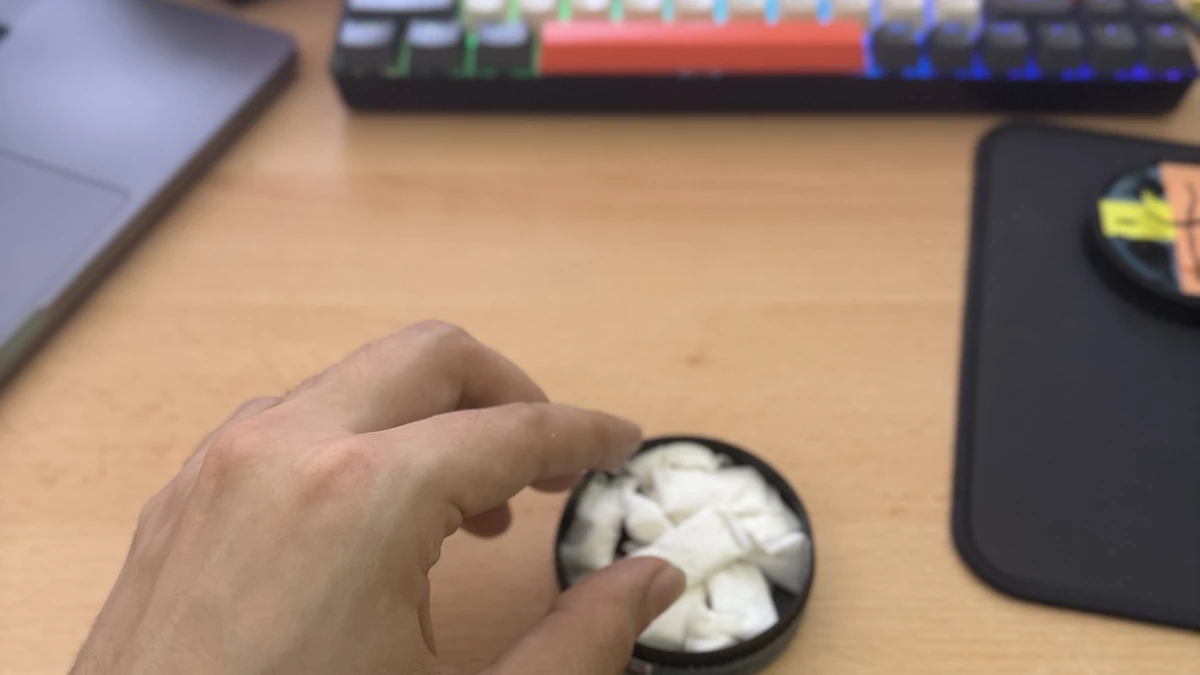
You pop a pouch, feel the buzz, and move on with your day
No smoke. No smell. Nobody even notices. Zyn and other nicotine pouches feel like the clean alternative to everything else. You tuck one under your lip at work, during a lecture, on the train. It feels like it has zero consequences.
That’s what I thought for four years. Eight pouches a day. I figured if there’s no smoke, there’s no real damage. Turns out I was wrong about a few things.
What nicotine actually does once it enters your body
There’s a gap in the research right now. No long-term epidemiological studies on nicotine pouches exist. The products entered the mainstream around 2019-2020. Nobody can tell you with certainty what 10 or 20 years of daily use will do. A 2025 narrative review in Frontiers in Public Health confirmed that “the long-term health effects are still unknown.”
The FDA authorized ZYN products in January 2025, calling them “lower risk than combustible tobacco” but explicitly adding: “still addictive and not risk-free.” Lower risk than cigarettes. Not risk-free. Important distinction.
What we do have: decades of nicotine research. And nicotine is exactly what these pouches deliver. Across all brands on the market, nicotine levels range from 1mg to over 100mg per pouch. Directly through the lining of your mouth into your bloodstream. The pouches are designed to be slightly alkaline, which speeds up how fast and how much nicotine your body absorbs.
Your brain on nicotine
Nicotine binds to acetylcholine receptors in your brain and triggers a dopamine release. That’s the buzz. That’s the “I can focus better” or “I am super fast” feeling. But it is also the reason you why reach for the next pouch.
The WHO warned in May 2026 that nicotine pouch brands are specifically targeting youth, and that nicotine exposure during adolescence affects brain development, including attention and learning. A 2025 study in npj Dementia analyzing over 10,000 participants found that smoking predicted brain volume loss in gray and white matter. That research focused on smokers, not pouch users specifically, but the active ingredient is the same: nicotine. What you do notice over years of use: You need to up the dosage - over time, your pouches get stronger and stronger and your stress tolerance without a pouch shrinks.
The supposed focus boost is a trap because nicotine creates a new baseline. The brain adjusts and you need a pouch just to feel normal. When the brain says “I need nicotine again” your focus drops but it does come back when you give it what its craves for.
Your gums and mouth
This one is controversial. Some users report zero gum issues after years. Others see gum changes after some time. A 2024 systematic review in BMC Oral Health found “limited evidence to confirm the effects of nicotine pouches on oral health due to the low number of studies and high risk of bias.” Translation: we don’t have enough data to say anything definitive.
What the research does show: redness and white patches where you place the pouch. Both go away when you stop using. That’s the good news. The bad news: no long-term studies exist comparing brands, and a 2026 Frontiers review confirmed “no long-term epidemiological evidence is currently available to assess potential impact upon oral carcinogenesis.”

Nicotine pouches contain different chemical compositions depending on the manufacturer. A 2023 toxicological comparison study tested specific brands and found low levels of formaldehyde, chromium, and nickel in some products. Levels were significantly lower than in cigarettes or traditional smokeless tobacco, but they weren’t zero. The chemical makeup varies between brands, and most users never check what’s actually in their pouch beyond the nicotine strength.
What users commonly report: gum sensitivity, white patches where the pouch sits, occasional bleeding when brushing, dry mouth, and a strange jaw sensation. A 2025 cross-sectional survey in Saudi Arabia asked regular nicotine product users about self-reported symptoms. The most common: difficulty breathing (40.5%), changes in taste or smell (36.7%), headaches (33.4%), and rapid or irregular heartbeat (28.4%). Self-reported data has limitations, but the pattern is consistent with what users describe online.
The nicotine cycle
Every substance you put in your body has an effect. Nicotine’s effect is that it feels genuinely good in the moment. Relaxing. Stress melts away. You feel present.
The problem: none of the negative effects show up at the time of use. You feel a slight burn on your lip, maybe tingling in your fingers, a light head rush. Nothing that feels like damage. Nothing that triggers alarm.
The damage is structural. It builds over months and years. Your body enters a rhythm: nicotine in, dopamine up, nicotine out, stress up, craving starts, nicotine in again. This cycle runs every 30 to 90 minutes, all day, every day. Your nervous system never rests.
Curious how many pouches you actually go through in a day? Most people underestimate by 40%. Track it with SnusStop, one tap per pouch.
How fast addiction actually happens
This is the part that surprised me most. You start with a low dose, maybe 6mg or 8mg. It feels nice. You don’t think much of it. Within weeks, you want it every day. Within months, you’ve moved up to stronger pouches because the old ones stopped hitting.
You don’t realize you’re becoming dependent. That’s the tricky part. It just feels like something you enjoy. Like coffee. Like a habit. The moment it becomes more than that is invisible.
Here’s a test anyone can try: skip nicotine pouches for one full week. If you are able to make this pause without experiencing any major side effects, then perhaps you are more in control than others. Most people get incredibly nervous whenever the can runs out.
Other people handle it more easily. They can take two-day breaks without issues. Long-term users, especially those on high-strength pouches (20mg+), may have built a tolerance that can make quitting significantly harder. Your body has adjusted to processing a certain amount of nicotine daily. Taking that away feels like pulling a rug out from under you.
The comparison that doesn’t hold up
“It’s safer than smoking.” You hear this constantly. And it might be true in terms of lung cancer and tar. But “safer than cigarettes” is a low bar. It doesn’t mean “safe.”
Remember the graphic warnings on cigarette packs in Europe? Mutilated lungs, diseased organs, printed right on the box. People kept smoking anyway. Knowledge alone doesn’t break addiction. The same applies to pouches. Knowing the side effects doesn’t automatically make you stop.
The difference with nicotine pouches: there are no warning images. No public health campaigns. No cultural awareness that this might be a problem. The packaging looks like a mint tin. The marketing targets young people. And most users genuinely believe they’re making a harmless choice.
What the research can’t tell you yet
No one can predict what 10 or 20 years of daily nicotine pouch use will look like for your specific body. The products entered the mainstream market around 2019-2020. We’re less than a decade in. Long-term epidemiological studies take time.
What we know from nicotine research and early pouch-specific data:
- Cardiovascular effects: nicotine raises heart rate and blood pressure acutely. 28.4% of regular pouch users in a 2025 study reported rapid or irregular heartbeat. Long-term cardiovascular impact is unstudied.
- Brain development: the WHO warns nicotine affects brain development in people under 25. Most pouch users start in their teens or early twenties.
- Chemical exposure: some pouch brands contain formaldehyde, chromium, and tobacco-specific nitrosamines, according to toxicological analyses cited in the Frontiers 2025 review. Levels are lower than in cigarettes, but they’re not zero.
- Oral health: mild, reversible mucosal reactions confirmed. Long-term oral cancer risk unknown, no epidemiological evidence available.
What we don’t know: cancer risk from decades of use, effects on fertility, interaction with medications, cumulative damage from brand-specific chemical formulations.
The 60-second Anchor in SnusStop helps you pause between craving and decision. Your brain learns: Resisting can become easier when you focus on the present moment.
Why young people are especially at risk
Most Zyn users are under 30. Many start in their teens. At that age, you haven’t developed your own coping strategies for stress, boredom, social pressure. Nicotine becomes the shortcut. Bad day? Pouch. Exam stress? Pouch. Bored? Pouch.
I get it. I used pouches to handle my day for years. It works in the moment. But it replaces the development of real coping skills with a chemical dependency. And the longer you rely on it, the harder it becomes to handle stress without it.
This isn’t a moral judgment. Nobody should be shamed for using nicotine. Every person gets to decide what they put in their body. Addiction serves a purpose for the person experiencing it, often as a way to cope with situations they don’t have tools for yet.
But understanding what’s happening inside your body while you use these products, that’s just information. What you do with it is your choice.
Frequently Asked Questions
Are Zyn pouches bad for your gums?
Reports vary widely. Some users see gum recession and white patches after months of use. Others report no visible changes after years. No long-term clinical studies exist yet comparing oral health outcomes in pouch users versus non-users.
How many Zyns a day is too many?
There’s no official medical threshold. But if you’re using more than 10-15 pouches per day, you’ve likely built significant nicotine tolerance. A simple test: try going without for one week. The severity of your withdrawal symptoms tells you more than any number.
Can Nicotine Pouches cause cancer?
We don’t know yet. Nicotine pouches haven’t been on the market long enough for cancer epidemiology studies. Nicotine itself is not classified as a carcinogen by most health agencies, but it promotes tumor growth in lab settings. The chemical additives in pouches are a separate concern with no long-term data.
Is Zyn worse than smoking?
Probably not in terms of lung damage and tar exposure. But “less harmful than cigarettes” doesn’t equal “harmless.” Nicotine dependency, cardiovascular stress, potential oral health damage, and unknown long-term effects remain real concerns.
Does nicotine shrink your brain?
A 2025 study of 10,000+ participants found that smoking predicted reduced gray and white matter brain volume. This research was on smokers, not nicotine pouch users, so we can’t directly apply the findings to pouches. The WHO has separately warned that nicotine affects brain development in people under 25. No pouch-specific brain imaging studies exist yet.
Your body, your decision
I’m not going to tell you to quit. That’s not my place and it wouldn’t work anyway. Telling someone to stop rarely changes anything. You know that from the cigarette warning labels.
What I do think matters: knowing what’s going on inside your body while you use these products. Not because it should scare you into quitting. But because blind consumption, where you never think about what you’re actually doing to yourself, that’s the real risk.
If you want to understand your own consumption, start by counting. How many pouches per day, really? When do you reach for one, and why? The patterns tell you more than any article ever could.
SnusStop helps you track, reduce, or quit nicotine pouches at your own pace. Free for 3 days. Download on the App Store | snusstop.app
This article is for informational purposes only and does not constitute medical advice or an encouragement to attempt nicotine withdrawal. Nicotine withdrawal can carry risks, particularly for individuals with pre-existing conditions, during pregnancy, or when taking medication. The author is not a healthcare professional. Consult a qualified medical provider before starting a withdrawal. The information presented here is based on publicly available research and personal experience. It is not intended to diagnose, treat, or prevent any condition. The views expressed reflect the personal opinions of the author. Statements may be inaccurate or incomplete, and arguments may contain gaps. Images used in this article are symbolic and sourced from Unsplash. They do not depict actual nicotine pouch users and are not intended to be interpreted as a call to action. This website and its content are intended for adults (18+). Disclosure: The author is the founder of SnusStop. "Zyn" is used in this article as a commonly recognized term for nicotine pouches and does not imply any affiliation with or endorsement by the ZYN brand or its parent company.
Sources
- Nicotine pouches: a narrative review of the existing literature — Frontiers in Public Health, 2025
- WHO warns nicotine pouch brands targeting youth as sales surge — WHO, May 2026
- Smoking predicts brain atrophy in 10,134 healthy individuals — npj Dementia, 2025
- What is the impact of nicotine pouches on oral health: a systematic review — BMC Oral Health, 2024
- Nicotine pouches, oral cancer and tobacco harm reduction — Frontiers in Oral Health, 2026
- Harmful and potentially harmful constituents in nicotine pouch products — PMC, 2023
- Nicotine negatively affects its users’ health and psychology — PMC, 2025
- FDA authorizes marketing of 20 ZYN nicotine pouch products — FDA, January 2025